Turn Up the Heat (Then Cool It Down): The Science of Temperature as a Detox Tool
There's a reason Nordic cultures have been sitting in saunas for thousands of years. And there's a reason elite athletes have been jumping into ice baths long before it became a social media moment. Temperature extremes — whether sweltering heat or shocking cold — do something to the human body that's hard to replicate any other way.
The science has a name for it: hormesis. The idea that a controlled, temporary stressor applied to your body can trigger a cascade of adaptive, healing responses. Think of it as stress that actually works for you instead of against you.
If you're serious about your reset — not just surface-level cleansing, but deep cellular renewal — thermal therapy deserves a spot in your protocol.
What Heat Actually Does Inside Your Body
When your core temperature rises, your body doesn't just sweat. It launches a sophisticated internal response.
Heat shock proteins (HSPs) get activated. These molecular chaperones repair damaged or misfolded proteins — essentially performing quality control on your cellular machinery. Damaged cells get flagged. Repair mechanisms kick in. It's a form of internal housekeeping that most of us never trigger because we spend our lives in climate-controlled comfort.
At the same time, blood flow to your skin and muscles increases dramatically, delivering oxygen and nutrients while helping flush metabolic waste. Your lymphatic system gets a workout. And your heart rate elevates in a way that mimics moderate cardiovascular exercise — which is why some researchers describe sauna use as "passive cardio."
There's also compelling evidence that regular sauna use reduces markers of systemic inflammation, lowers blood pressure over time, and supports cardiovascular health. A long-running Finnish study found that men who used a sauna four to seven times per week had significantly lower rates of cardiovascular disease than those who went once a week. That's not a small finding.
Sauna Options: Which One Is Right for Your Reset?
Not all saunas are created equal, and the differences matter depending on what you're going after.
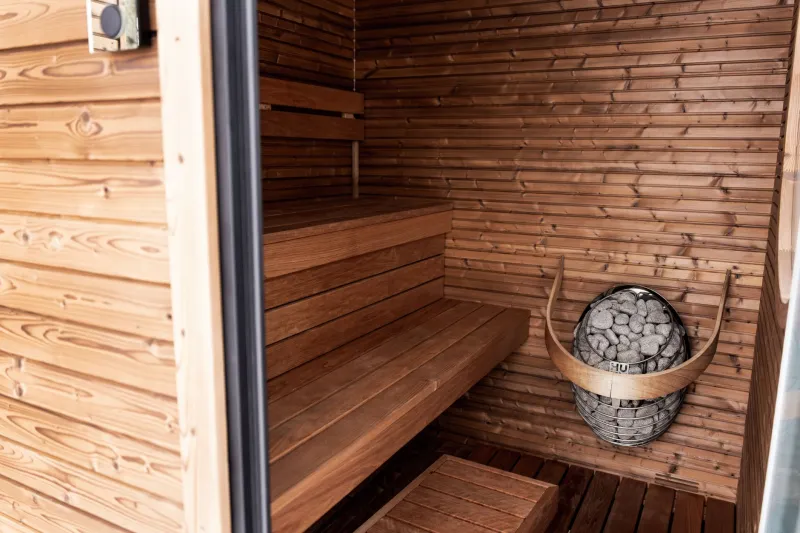
Traditional Finnish saunas operate at high temperatures (160–200°F) with low humidity. You can add steam by pouring water over hot rocks (called löyly), creating brief bursts of humidity. The intense heat drives deep sweating and is excellent for cardiovascular benefits and heat shock protein activation.
Infrared saunas run cooler (120–150°F) but penetrate tissue differently. Near- and mid-infrared wavelengths are absorbed directly by the body rather than just heating the surrounding air. Proponents argue this allows for deeper sweating at more tolerable temperatures, making infrared saunas more accessible for beginners or those sensitive to intense heat. The research on infrared specifically is growing, with promising data on pain reduction, skin health, and detoxification — though the overall evidence base is still smaller than for traditional saunas.
Steam rooms use high humidity at lower temperatures. They're gentler on the respiratory system for some people and excellent for skin hydration, but they don't produce the same cardiovascular intensity as dry saunas.
For a reset-focused protocol, traditional or infrared saunas are generally your best bets. Infrared is particularly interesting from a skin and nutrition angle — some research suggests it can improve circulation to skin tissue and support collagen production.
The Cold Side: Why Ice Baths and Cold Plunges Belong in the Conversation
Cold water immersion triggers a completely different but equally powerful set of responses.
When your body hits cold water, it goes into immediate survival mode. Norepinephrine — a neurotransmitter and hormone involved in focus, mood, and alertness — surges dramatically. Research from University of Virginia found that cold exposure can increase norepinephrine by 200–300%. That's a significant neurological event, and it partly explains why so many people describe feeling mentally sharp and emotionally lifted after a cold plunge.
Cold also activates brown adipose tissue (brown fat) — a metabolically active fat that generates heat by burning energy. Regular cold exposure can increase brown fat activity, which has positive implications for metabolic health and insulin sensitivity.
From a recovery and inflammation standpoint, cold immersion reduces inflammatory markers and speeds muscle recovery, which is why athletes have used it for decades. It also triggers a rebound vasodilation effect when you warm back up — blood rushes back into your extremities, flushing tissues and supporting circulation in a way that complements what heat does.
The Contrast Protocol: Where the Real Magic Happens
Using heat and cold in alternating cycles — sometimes called contrast therapy — may offer more benefits than either alone. The alternating vasoconstriction (from cold) and vasodilation (from heat) creates a kind of pump effect on your circulatory and lymphatic systems, moving fluid and waste products more efficiently than a single temperature exposure.
A basic contrast protocol might look like this:
- 15–20 minutes in a sauna
- 2–3 minutes in a cold shower or plunge (50–60°F)
- Rest for 5 minutes
- Repeat 2–3 rounds, ending on cold if you want energy, or heat if you want relaxation
Many high-end wellness centers across the US now offer dedicated contrast therapy facilities, but you can approximate this at home with a sauna session followed by a cold shower, or even a hot bath followed by a cold rinse.
Common Myths Worth Clearing Up
"You sweat out toxins." Sort of, but it's more nuanced. Sweat does contain trace amounts of heavy metals, BPA, and other compounds. But your liver and kidneys handle the bulk of detoxification. Heat therapy supports those systems indirectly — by improving circulation, reducing inflammation, and activating cellular repair — rather than directly flushing toxins through your pores.
"Longer is always better." It's not. For most people, 15–20 minutes per sauna session is sufficient to trigger meaningful physiological responses. Pushing significantly beyond that — especially without adequate hydration — increases the risk of dehydration, dizziness, and cardiovascular strain.
"Cold plunges are dangerous." For healthy adults, brief cold immersion is generally safe. But if you have cardiovascular conditions, Raynaud's disease, or are pregnant, check with your doctor first. Start with cold showers before jumping into a full plunge, and never do cold immersion alone if you're a beginner.
Building Thermal Therapy Into Your Reset
You don't need a fancy spa membership to get started. A hot bath at 104°F for 20 minutes, followed by a cold shower, is a legitimate entry point. If you have access to a sauna — many gyms across the US offer them — aim for two to four sessions per week to start seeing measurable effects.
Hydrate before, during, and after. Replenish electrolytes, not just plain water. And give your body time to adapt — the first few sessions might feel uncomfortable, but that's the point. Hormesis works precisely because it pushes you just past your comfort zone.
Temperature is one of the oldest wellness tools in human history. Used intentionally, it's also one of the most powerful ways to accelerate your reset from the cellular level up.